

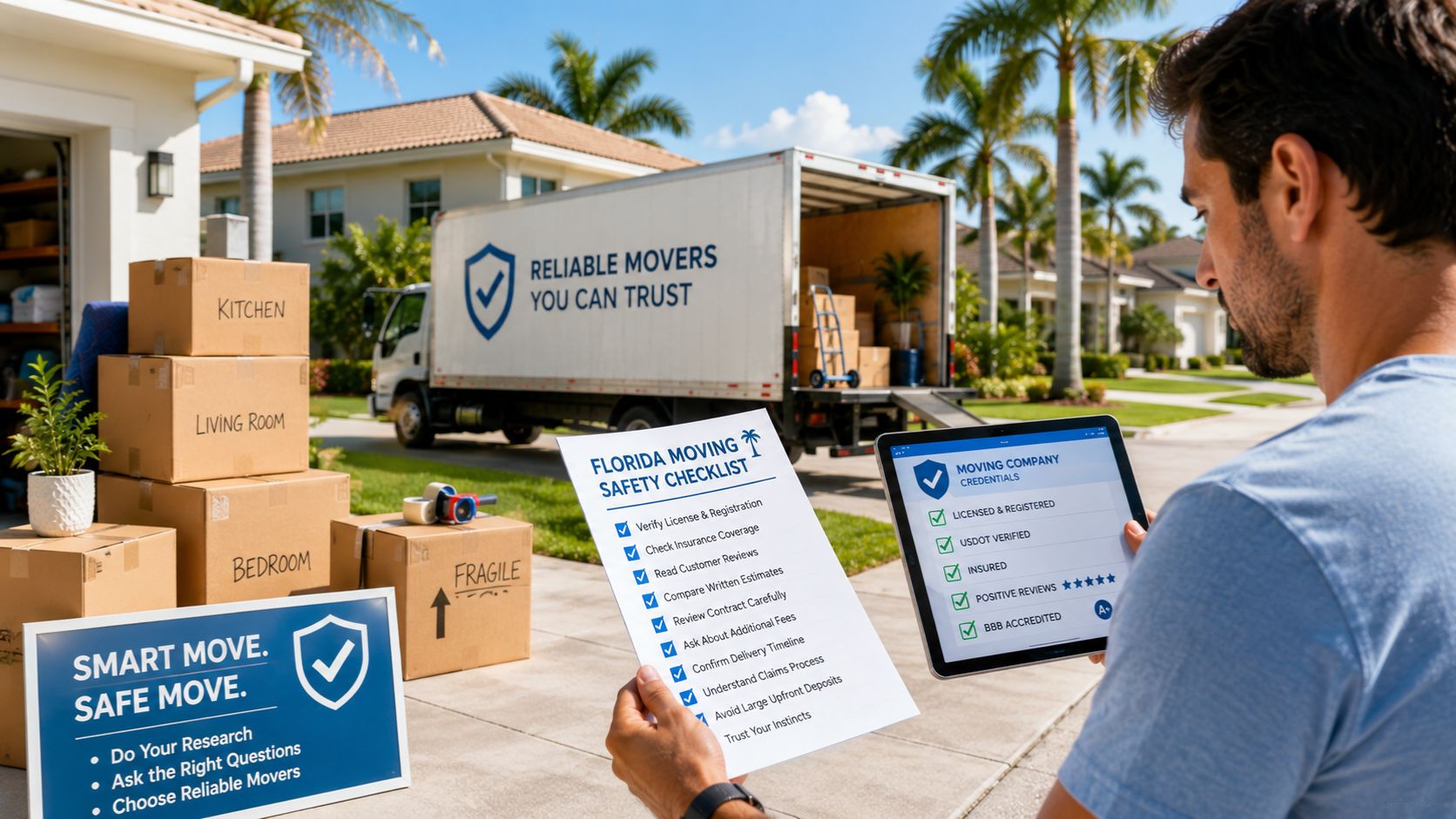
Choosing movers is one of the most important decisions homeowners make during relocation. The right moving company can make the process organized and stress-free, while the wrong movers can create expensive problems, hidden fees, delayed deliveries, and damaged belongings.
Many homeowners only realize they hired unreliable movers after the relocation has already started. That is why creating a proper safety checklist before booking movers is one of the smartest ways to protect your home, your belongings, and your budget.
If you want a safer moving experience, this guide will help you understand how to verify a moving company in Florida step by step while avoiding the most common relocation mistakes.
Why Every Homeowner Needs a Moving Safety Checklist
Relocation involves more than packing boxes and scheduling transportation. You are trusting a company with nearly everything you own.
Reliable Movers Usually Help Prevent
- Hidden moving charges
- Delayed deliveries
- Damaged furniture
- Communication problems
- Relocation scams
Unreliable Movers Often Cause
- Last-minute price increases
- Missing belongings
- Poor handling
- Stressful moving experiences
- Unexpected fees
A safety checklist helps homeowners identify trustworthy movers before problems happen.
Step 1: Research the Moving Company Thoroughly
Before requesting estimates, homeowners should investigate the company carefully.
Things Smart Homeowners Check First
- Google reviews
- Company website quality
- Business history
- Office location
- Social media presence
- Customer testimonials
Early Warning Signs
- No online presence
- Fake-looking reviews
- Recently created websites
- Generic business information
- Inconsistent contact details
The first step to verify a moving company in Florida is confirming the business looks professional and legitimate online.
Step 2: Confirm Florida Registration and Licensing
Professional movers should operate legally and transparently.
Reliable Movers Usually Provide
- Florida moving registration
- USDOT numbers for interstate moves
- Business documentation
- Insurance proof
Red Flags to Watch
- Refusal to share credentials
- Missing registration details
- Inconsistent company information
- No written documentation
Legitimate movers expect customers to verify their credentials before booking.
Step 3: Compare Multiple Moving Estimates
One estimate is never enough.
A Smart Comparison Strategy
Request quotes from:
- At least three movers
- Licensed companies only
- Movers with verified reviews
Reliable Estimates Usually Include
- Transportation pricing
- Delivery timelines
- Packing fees
- Additional service costs
- Insurance information
Warning Signs in Estimates
- Extremely low pricing
- Vague fee structures
- Verbal-only quotes
- Missing service details
Reliable movers prioritize transparency instead of unrealistic discounts.
Step 4: Watch How Movers Communicate
Communication quality often predicts the relocation experience.
Professional Movers Usually
- Return calls quickly
- Answer questions clearly
- Explain the process professionally
- Provide organized documentation
Scam Movers Often
- Rush conversations
- Avoid details
- Ignore questions
- Pressure customers into quick decisions
Professional communication is another important way to verify a moving company in Florida before moving day.
Step 5: Verify the Office Location
A trustworthy moving company should have a real, verifiable business location.
Things Homeowners Should Check
- Google Maps listing
- Office photos
- Business signage
- Local business records
Major Warning Signs
- P.O. Box-only addresses
- No visible office
- Fake office images
- Inconsistent business details
Reliable movers operate transparently because they expect customers to research them.
Step 6: Read Customer Reviews Carefully
Reviews often reveal what advertisements hide.
Positive Review Patterns Usually Mention
- Honest pricing
- Careful furniture handling
- Professional moving crews
- On-time delivery
- Good customer support
Negative Review Patterns Often Include
- Hidden charges
- Delayed delivery
- Damaged belongings
- Poor communication
- Unanswered phone calls
Instead of focusing only on star ratings, homeowners should study detailed customer experiences carefully.
Step 7: Review the Contract Slowly
Many relocation problems begin because customers sign contracts too quickly.
A Reliable Moving Contract Should Include
- Pickup dates
- Delivery windows
- Pricing breakdown
- Insurance information
- Inventory details
- Cancellation terms
Contract Red Flags
- Blank sections
- Verbal promises only
- Missing pricing details
- Vague wording
Carefully reviewing the contract helps homeowners avoid misunderstandings later.
Step 8: Ask Detailed Insurance Questions
Even experienced movers can experience accidents during transportation.
Questions Every Homeowner Should Ask
- What damages are covered?
- How are claims handled?
- Is full value protection available?
- What items are excluded?
Reliable Movers Usually Explain
- Liability coverage
- Claims procedures
- Coverage limitations
- Optional protection plans
Dishonest movers often avoid detailed insurance conversations completely.
Step 9: Avoid High-Pressure Sales Tactics
Professional movers allow customers time to compare companies and ask questions.
Scam Movers Often Say
- “Book today only”
- “Prices increase tomorrow”
- “Deposit required immediately”
- “Limited moving spots available”
Reliable Movers Usually
- Encourage research
- Respect customer timelines
- Allow estimate comparisons
- Provide written documentation
Pressure usually means the company wants customers to skip proper research.
Step 10: Understand the Most Common Moving Scams
Many relocation scams follow predictable patterns.
Lowball Estimate Scam
The mover offers cheap pricing and dramatically increases costs later.
Hostage Load Scam
Movers refuse to unload belongings until additional payment is made.
Deposit Scam
The company disappears after collecting upfront payment.
Fake Insurance Scam
The mover claims to provide protection without valid coverage.
You can also review Moving Scam Stories shared by previous customers to better understand how these scams affect real homeowners during relocation.
A Quick Safety Checklist Before Booking Movers
Before hiring movers, homeowners should confirm:
✔ Verified Florida registration
✔ Positive customer reviews
✔ Transparent pricing
✔ Professional communication
✔ Insurance documentation
✔ Written estimates
✔ Real office location
✔ Clear moving contract
✔ Reasonable payment terms
✔ No aggressive pressure tactics
Following this checklist makes it easier to verify a moving company in Florida and avoid relocation scams.
Final Thoughts
A safer relocation always begins with careful research and smart preparation. Homeowners who follow a structured safety checklist are far more likely to avoid hidden fees, damaged belongings, delayed deliveries, and dishonest movers.
Before booking anyone, take time to verify a moving company in Florida, compare movers carefully, review contracts slowly, and pay attention to warning signs early in the process.
Reliable movers prioritize professionalism, communication, transparency, and customer trust from the very beginning — and those qualities can make your relocation experience far smoother and safer.

 English
 Arabic
 French
 Spanish
 Portuguese
 Deutsch
 Dutch
Dutch
 Italiano
 Russian
 Romaian
 Portuguese (Brazil)
 Greek
Greek