

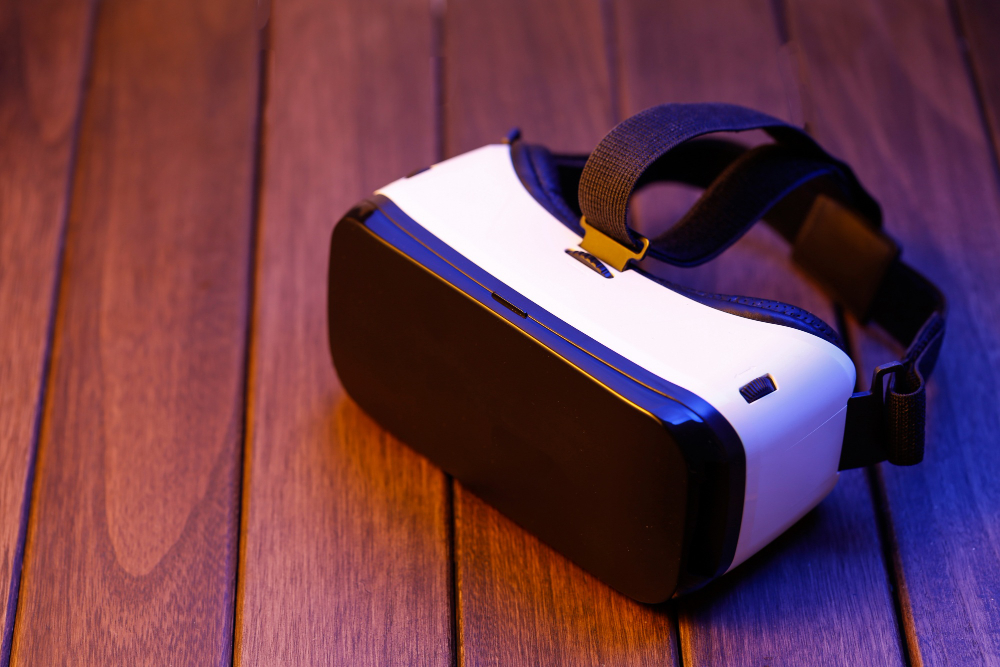
In the B2B XR industry, the shift toward "Pancake" optics is driven by the demand for slim, lightweight form factors. By folding the optical path through a series of polarized lenses and half-mirrors, Pancake modules allow the display to sit significantly closer to the eye.
However, for hardware engineers and procurement teams, this compact design creates a massive problem: extreme light attenuation. In a Pancake system, you aren't just bending light; you are fighting a losing battle against its intensity.
1. The 10% Transmission Barrier
The primary problem with the Pancake optical module is its inherent light loss.
-
The Issue: Because light must pass through multiple polarizers and a 50/50 beam-splitting layer, the total light transmission is often as low as 10% to 15%.
-
The B2B Problem: If you use a standard 500-nit micro-display, the user only perceives about 50 nits—unacceptable for high-fidelity professional use.
-
The Solution: Success in B2B Pancake integration requires a move to high-luminance Micro OLEDs (often exceeding 5,000 nits) to compensate for the "Pancake Tax." This shift, however, creates a secondary problem of power consumption and thermal throttling that must be solved through advanced heat-spreading substrates.
2. Polarization Artifacts and "Ghosting"
Unlike simple refractive lenses, Pancake optics rely on the precise manipulation of light's polarization state.
-
The Problem: If the Quarter-Wave Plates (QWP) or the polarizing beam splitters are slightly out of alignment—or if they suffer from birefringence—you get internal reflections (ghost images).
-
The Consequence: In medical or flight simulations, these ghost images aren't just a nuisance; they are a distraction that can lead to simulation sickness or incorrect data reading.
-
The Fix: B2B-grade modules must utilize high-precision film lamination techniques. Rather than using standard adhesive layers, manufacturers must use vacuum-bonded, low-birefringence optical adhesives to ensure that the polarization state remains pure throughout the entire folded path.
3. The Stray Light and Contrast Floor Problem
Because the Pancake module is essentially a box of mirrors, managing stray light is significantly more difficult than in a Fresnel system.
-
The Pain Point: Light from the micro-display can bounce off the lens edges or the housing, causing a "haze" that washes out the deep blacks that Micro OLEDs are known for.
-
The Strategic Fix: To resolve this, the internal housing must be treated with ultra-black coatings (such as Vantablack derivatives or specialized flocking) and the lens edges must be blackened. For professional B2B hardware, the contrast ratio is only as good as the system's ability to swallow "lost" photons.
Field of View (FOV) vs. Eye-Relief Trade-offs
A common mistake in B2B procurement is demanding a 110-degree FOV from a Pancake module without accounting for the eye-relief distance. As the optics get closer to the eye to save space, the "eye-box" (the area of clarity) shrinks. For users who wear glasses or in environments where the headset might shift (like motion simulators), a narrow eye-box causes the image to blur instantly. Solving this requires aspheric pancake lens designs that trade a few millimeters of thickness for a more stable, usable viewing area.
Conclusion
The Pancake optical module is a masterclass in compromise. In the B2B sector, the challenge isn't making a headset small—it’s making a small headset that doesn't overheat or produce a dim, ghost-filled image. By prioritizing high-nit displays to overcome the efficiency tax and ensuring rigorous polarization control, OEMs can deliver the promise of "all-day wearability" without sacrificing the visual clarity required for professional applications. In the world of Pancake optics, precision is the only way to pay the price of miniaturization.

 English
 Arabic
 French
 Spanish
 Portuguese
 Deutsch
 Turkish
 Dutch
Dutch
 Italiano
 Russian
 Portuguese (Brazil)
 Greek
Greek