

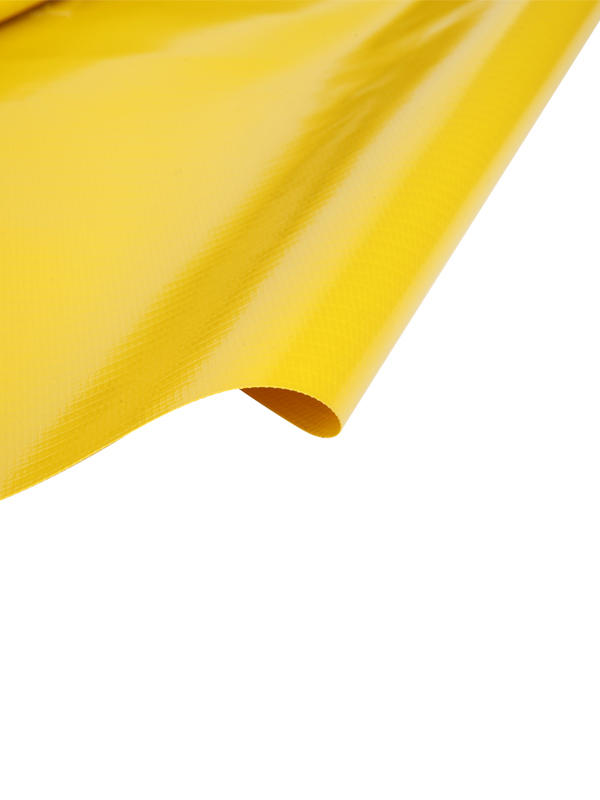
In modern flexible material engineering, inflatable structures require textiles that combine durability, airtightness, and flexibility. Among these materials, PVC Inflatable Fabric developed for industrial and recreational products has become a reliable choice for manufacturers seeking both structural strength and long-term performance. Widely supplied by companies such as Shanghai MSD International Trade Co., Ltd, this coated textile integrates advanced polymer technology with reinforced base fabrics to support a wide range of inflatable products.
The basic structure of inflatable PVC textiles consists of a high-strength polyester base cloth combined with multiple layers of polyvinyl chloride coating. The woven polyester fabric provides the core mechanical strength, allowing the material to resist tearing and stretching during inflation and repeated use. The PVC coating serves as a protective barrier that ensures air retention, waterproofing, and resistance to environmental factors such as ultraviolet radiation and moisture. This combination of textile reinforcement and polymer coating creates a durable composite material capable of supporting demanding applications.
Manufacturing inflatable coated textiles involves several specialized processing stages. The production process usually begins with the preparation of the polyester reinforcement fabric. This fabric must meet strict standards for tensile strength, uniform weaving density, and dimensional stability. After preparation, the textile passes through coating equipment where liquid PVC compounds are evenly applied to both sides of the fabric. Advanced calendaring or knife-over-roll coating methods help control the thickness and uniformity of the polymer layer.
Once the coating process is completed, the material undergoes controlled heating and curing to stabilize the polymer structure. Proper curing ensures that the PVC layers bond firmly with the polyester base cloth while maintaining flexibility. Shanghai MSD International Trade Co., Ltd applies strict production control to ensure that coated fabrics maintain consistent thickness, smooth surface quality, and reliable air retention properties across large production batches.
Mechanical durability is one of the most important characteristics of inflatable coated fabrics. These materials must withstand repeated inflation cycles, mechanical stress, and environmental exposure without losing structural stability. High tensile strength allows the textile to maintain its shape even when subjected to internal air pressure. Tear resistance is also essential, particularly in large inflatable structures where localized stress points may occur.
Air retention performance is another critical factor for inflatable materials. The polymer coating forms a sealed barrier that prevents air leakage during use. High-quality coating formulations improve gas barrier properties while maintaining elasticity. This balance between airtightness and flexibility ensures that inflatable products remain stable during extended operation.
Thermal stability and weather resistance are also important considerations. Inflatable products are often used outdoors, where they are exposed to sunlight, temperature changes, and moisture. PVC-coated textiles typically incorporate UV stabilizers and weather-resistant additives to reduce degradation caused by prolonged sun exposure. These additives help maintain material strength and color stability over time.
Processing versatility also contributes to the popularity of inflatable coated fabrics. The material can be easily cut, welded, or bonded using high-frequency welding or hot-air welding equipment. These techniques allow manufacturers to create airtight seams that maintain structural integrity under pressure. Seam strength is a critical factor because weak joints could lead to air leakage or structural failure during operation.
Testing procedures are essential to ensure that inflatable fabrics meet industrial performance requirements. Mechanical testing typically includes tensile strength measurement, tear resistance evaluation, and elongation testing. These tests determine how the material behaves when subjected to stretching forces and internal pressure.
Air tightness testing is another important quality verification step. Manufacturers often conduct pressure retention tests to measure how well the material maintains internal air pressure over time. Additional testing may include seam strength evaluation, coating adhesion analysis, and abrasion resistance measurement. These tests confirm that the coated textile performs reliably in real-world conditions.
Applications for inflatable coated textiles are extremely diverse. Recreational products such as inflatable boats, floating platforms, and water sports equipment commonly use this type of material because of its durability and water resistance. In the entertainment industry, inflatable structures such as advertising balloons, amusement park installations, and event decorations rely on coated fabrics for stability and visual appeal.
Industrial uses also continue to expand. Inflatable air structures are increasingly used in temporary shelters, emergency response systems, and architectural installations. These structures require materials capable of supporting large surface areas while maintaining air pressure and structural stability.
Another significant advantage of this material is its compatibility with printing and decorative finishes. The smooth PVC surface allows high-resolution graphics to be applied, making the material suitable for advertising inflatables and promotional displays. Customized colors and surface textures can also be produced during the coating process to meet different design requirements.
Manufacturers continue to improve inflatable fabric technology by optimizing coating formulations and reinforcement fabrics. Research efforts focus on enhancing durability, reducing weight, and improving environmental resistance. Companies such as Shanghai MSD International Trade Co., Ltd invest in advanced coating equipment and quality control systems to ensure that inflatable textiles meet the growing demands of industries ranging from recreation and advertising to emergency infrastructure.
Professionals seeking further technical insights into inflatable textile materials and their applications can explore detailed resources provided by Shanghai MSD International Trade Co., Ltd through the following reference: https://www.shanghaimsd.com/news/what-is-pvc-inflatable-fabric-everything-you-need-to-know.html .

 English
 Arabic
 French
 Spanish
 Portuguese
 Deutsch
 Turkish
 Dutch
Dutch
 Italiano
 Romaian
 Portuguese (Brazil)
 Greek
Greek