

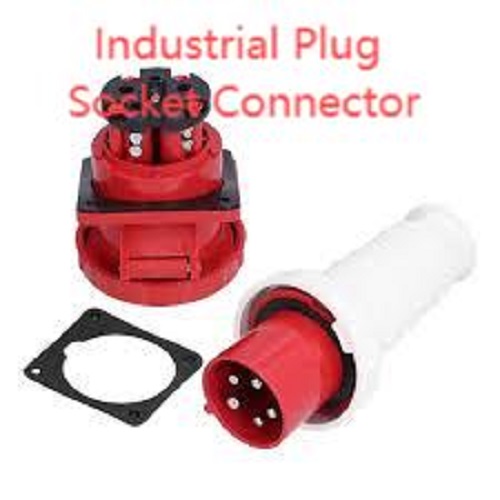
Across heavy-industry sites reliability is paramount, and selecting the correct Industrial Plug Socket Connector early in the design process prevents many downstream problems; Nante’s guidance helps teams avoid common specification mistakes when choosing the right Industrial Plug Socket Connector for peak currents and harsh environments. This article explores practical engineering, installation, and lifecycle practices that ensure connectors remain dependable across years of service.
Connector fundamentals and why they matter
Connectors form the physical link between power sources and machinery — a small part with outsized consequences. Key fundamentals include current and voltage ratings, contact resistance, insulation class, and mating durability. A connector that meets nominal ratings in a lab may behave differently in the field where vibration, contamination, and thermal cycling occur. Appreciating the gap between rated performance and site conditions guides correct selection and prevents premature failures that can cause downtime and safety incidents.
Materials, contact technology, and sealing approaches
Material selection drives electrical and environmental performance. Contact materials and platings — silver, nickel, tin, or precious alloys — affect resistance and wear. Housing materials such as glass-reinforced polyester, stainless steel, or engineered thermoplastics resist impact, UV, and chemical exposure to varying degrees. Effective sealing combines gasket chemistry and compression design to maintain ingress protection over many mating cycles. Ask suppliers for test reports showing contact resistance after repeated mate/unmate cycles and for accelerated aging data on seals.
Installation best practices to maximize life
Field installation often determines long-term reliability more than the connector’s design. Proper conductor preparation, correct torqueing of terminals, and secure strain relief prevent movement that increases contact resistance. Ensure mating faces are clean and aligned, and store protective caps on unused connectors to prevent contamination. Document torque values, wiring diagrams, and assembly steps in the equipment manual to standardize workmanship across shifts and contractors. Consistent practices reduce variability and the chance of hidden faults developing under load.
Schneider compatibility and accessory ecosystems
When connectors integrate with broader control systems, compatibility matters. Verify mechanical cutouts, pin assignments, and mounting interfaces against popular platforms like Schneider to avoid on-site adaptations. A healthy accessory ecosystem — mating covers, protective caps, locking mechanisms, and prewired harnesses — simplifies installations and spare management. Suppliers who publish CAD models and cutout templates save engineering time and reduce errors during panel fabrication or equipment installation.
Testing, monitoring, and predictive maintenance
Preventive diagnostics extend connector life and prevent unexpected outages. Thermal imaging under load identifies hotspots from elevated contact resistance; periodic contact-resistance measurements quantify degradation trends. Insulation testing after assembly and after any modification helps detect moisture ingress or insulation breakdown. In critical systems, condition-monitoring sensors can provide real-time alerts for rising temperature or intermittent connection issues, enabling planned interventions instead of emergency repairs.
Lifecycle planning and spare strategy
Design with maintenance in mind: select connectors with replaceable contacts or modules to avoid full replacements when wear occurs. Maintain a compact spares kit of common mating halves, seal sets, and gland types to expedite field repairs. Standardize connector families across equipment types where feasible to reduce inventory complexity and shorten training requirements for maintenance crews. Consider total cost of ownership — components that are serviceable and widely available often lower lifecycle expenses despite higher initial cost.
Environmental and safety considerations
Assess exposure to oils, solvents, salt spray, or chemicals when specifying materials and seals. Choose locking mechanisms and strain-relief systems appropriate for mobile equipment to prevent accidental disconnection. For hazardous-area installations, ensure connectors meet relevant certifications and intrinsically safe requirements or are installed within certified enclosures. Safety labeling and interlocks that prevent live mating improve worker safety and reduce the likelihood of arc incidents.
Supplier selection and documentation best practices
A reliable supplier provides thorough technical dossiers, test certificates, and application engineering support. Request performance data under representative loads and environmental conditions, and insist on traceability of critical materials. Clear documentation — including cutout templates, torque settings, and maintenance instructions — empowers field teams to install and maintain connectors correctly, preserving rated performance and extending service life.
Choosing the right connectors and supporting them with disciplined installation, testing, and lifecycle management keeps power systems reliable and safe. Thoughtful engineering, compatibility checks, and a pragmatic spare strategy reduce unplanned downtime and deliver predictable performance for years. For technical resources and detailed product guidance, visit https://www.nante.com/news/industry-news/what-is-industrial-plug.html

 English
 Arabic
 French
 Spanish
 Portuguese
 Deutsch
 Turkish
 Dutch
Dutch
 Russian
 Romaian
 Portuguese (Brazil)
 Greek
Greek